
Crazy Time Stats
Live Crazy Time stats by sample window, including segment frequency, bonus hit share, Top Slot matches, multipliers, and data limits.

Crazy Time stats summarise the wheel by sample window: segment frequency, bonus hit share, Top Slot matches, multiplier distribution, and hot or cold deltas. Pick a window, scan the cards, and read the data limits before any bet. Each round on the live wheel is independent, so past spins do not predict the next one. Treat these stats as context, not a forecast. The numbers come from public live-data feeds (similar to casinoscores and tracksino) at UK Gambling Commission (UKGC) licensed casinos in the United Kingdom that carry Evolution’s broadcast from the Riga studio. For raw rows, the tracker holds the full workspace and latest results show row-by-row outcomes.
Crazy Time Stats Snapshot
The snapshot answers the live stats question before any prose. Crazy time statistics here update inside one to two minutes after each round, so the cards read as a live statistics view rather than a static snapshot. Sample window, spin count, the most common segment, the latest bonus hit, and the top multiplier sit in five cards. Numbers update inside the chosen window, and the timezone stamp keeps the data honest for UK readers. Open the tracker for the full workspace, the latest results for row-level checks, and spin history for older rows beyond this window.
Selected Sample Window
The default window is past 24 hours, with 72-hour and 7-day options for wider context. Crazy Time live stats below are tied to that selection. Change the window and every card recalculates. Past 24 hours covers roughly 1,200 to 1,500 spins on the standard table, which is wide enough to soften most short-run noise but narrow enough to feel current.
Spin Count
Spin count is the raw size of the sample. A 200-spin sample is too small to read trends. Crazy time wheel stats start to look stable around 1,000 spins. A 7-day sample with 8,000+ spins sits close to certified RTP. Check spin count before trusting any pattern.
Most Common Segment
The number 1 covers 21 of 54 wheel positions, so it leads the frequency table on almost every window. When something other than 1 leads, the sample is short or the variance is wide. The crazy time spin stats below break that out.
Latest Bonus Hit
Latest bonus hit shows which round triggered most recently and how long ago that was. It is descriptive only. A long gap on the Crazy Time bonus is not a due event. Each round is independent.
Top Multiplier
Top multiplier in the window highlights the biggest paid figure across all bonus rounds and Top Slot stacks. Crazy time biggest multiplier today often sits between 200x and 1,500x; crazy time highest multiplier today only reaches the 5,000x to 20,000x band on rare bonus reveals. Crazy time stats today on this card refresh after every round close, so the figure resets each time a higher multiplier prints. For the longest single-round payouts, see big wins .
Sample window
- Value
- Past 24 hours
Spin count
- Value
- Syncing
Most common segment
- Segment
- 1
- Lands
- Syncing
- Share of sample
- 38.9%
Latest bonus hit
- Round
- Coin Flip
- Occurred at
- Syncing
- Multiplier
- 25x
Top multiplier in window
- Value
- 500x
- Segment
- Pachinko
- Occurred at
- Past 24 hours
Source scope
- Value
- Synced with Evolution API
Segment Frequency and Sample Size
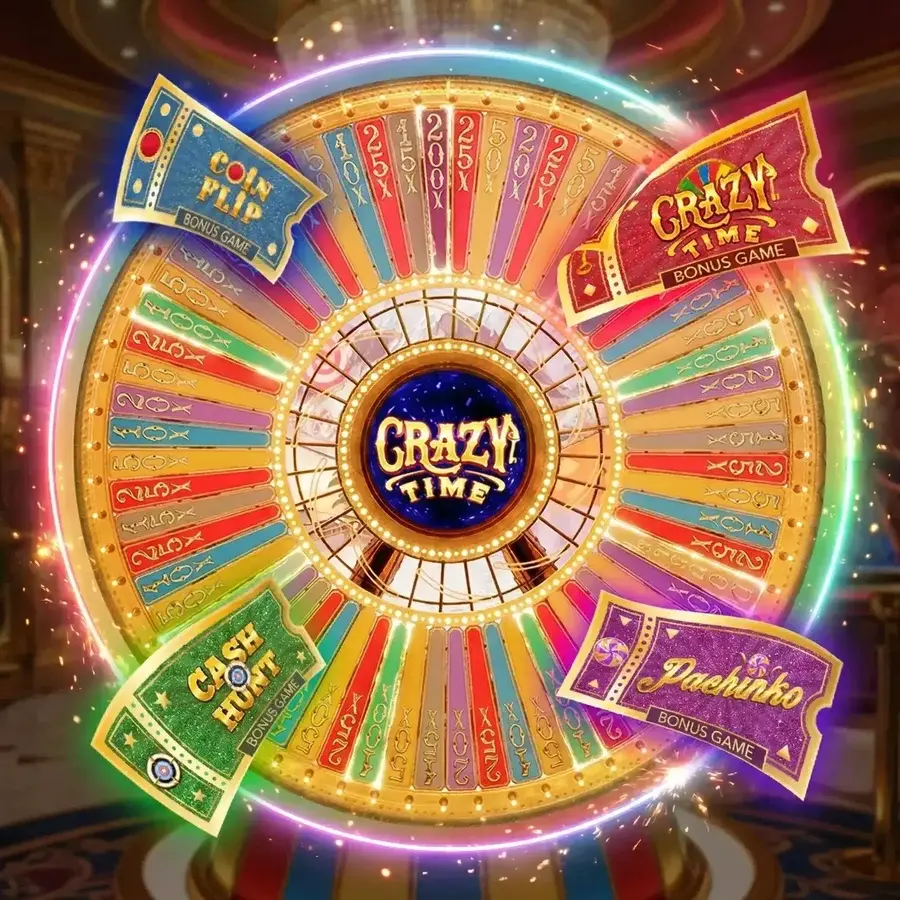
Segment frequency is the heart of crazy time game statistics. Eight segments share 54 wheel positions, and each one has a fixed expected share. Observed share inside a chosen window can drift above or below that, sometimes by a wide margin in short samples. Stats crazy time tools surface that drift as a delta. The catch is sample size: a 100-spin window can show wild swings; a 7-day window flattens them. Treat the cards below as a recent map of the wheel, not as a prediction.
Number Frequency
The four numbered segments cover 45 of 54 positions on the Crazy Time wheel. Number 1 sits on 21 positions (38.89% expected share). Number 2 covers 13 (24.07%). Number 5 covers 7 (12.96%). Number 10 covers 4 (7.41%). The crazy time wheel segments probabilities are fixed by Evolution’s spec, so observed share converges with these figures over wider windows. Crazy time evolution gaming stats published in the certified return tables match the figures above to two decimal places. Crazy time daily stats today often show one or two numbered segments running 2 to 4 percentage points off expected; that is normal variance from independent Bernoulli-style draws, not a hot streak.
Bonus Segment Frequency
Bonus segments share the remaining 9 of 54 positions. Coin Flip covers 4 (7.41%). Cash Hunt covers 2 (3.70%). Pachinko covers 2 (3.70%). The Crazy Time bonus covers 1 (1.85%). Bonus hits look choppy in short windows because the segments are rare; eight Coin Flip hits in 200 spins sits at 4%, but the same eight in 50 spins reads 16%. Always check spin_count before reading the bonus row.
Expected vs Observed Frequency
Expected share is the theoretical hit rate for each segment. Observed share is what the sample produced. Delta is observed minus expected. A positive delta means the segment ran above expected (hot). A negative delta means it ran below (cold). Neither label means a change is coming. The wheel is independent on every round.
Spins Since
Spins since counts how many rounds passed since a segment or bonus last landed inside the selected window. Crazy time spins since (last bonus) reads as a gap, not a queue. The Crazy Time bonus naturally drifts to 50, 80, sometimes 120 spins between hits in short samples. That is variance, not a due event.
Sample Size Limits
Sample size sets the confidence floor. Short windows swing through wide standard-deviation bands; wider windows steady through the law of large numbers and regression toward expected share. A 95% confidence interval on a 200-spin sample for the number 1 bet runs roughly +/-7 percentage points around the 38.89% expected share. On a 5,000-spin sample the band tightens to about +/-1.4 points. The bar chart below toggles between observed share, expected share, and delta so the math sits on one screen. Route exact probability tables and theoretical math to RTP by segment , and read recent results for the underlying rows.
| Segment | Lands | Share of sample | Expected share | Delta | Spins since | Average multiplier |
|---|---|---|---|---|---|---|
| 1 | … | … | 38.89% | … | … | 1.0x base |
| 2 | … | … | 24.07% | … | … | 2.0x base |
| 5 | … | … | 12.96% | … | … | 5.0x base |
| 10 | … | … | 7.41% | … | … | 10.0x base |
| Coin Flip | … | … | 7.41% | … | … | … |
| Cash Hunt | … | … | 3.70% | … | … | … |
| Pachinko | … | … | 3.70% | … | … | … |
| Crazy Time | … | … | 1.85% | … | … | … |
| Segment | Observed share | Expected share | Delta |
|---|---|---|---|
| 1 | 39.6% | 38.89% | +0.7 pts |
| 2 | 23.9% | 24.07% | -0.2 pts |
| 5 | 13.1% | 12.96% | +0.1 pts |
| 10 | 7.3% | 7.41% | -0.1 pts |
| Coin Flip | 7.6% | 7.41% | +0.2 pts |
| Cash Hunt | 3.5% | 3.70% | -0.2 pts |
| Pachinko | 3.8% | 3.70% | +0.1 pts |
| Crazy Time | 1.2% | 1.85% | -0.6 pts |
Bonus Frequency and Multiplier Stats

Crazy time bonus frequency is the most-read row on any stats page. Bonus rounds carry the volatility, the largest multipliers, and the moments players actually wait for. The cards below show crazy time bonus hit rate and crazy time bonus hit share inside the selected window, plus the average and top multiplier per round. Mechanics live on the bonus rounds page; this section sticks to the data summary.
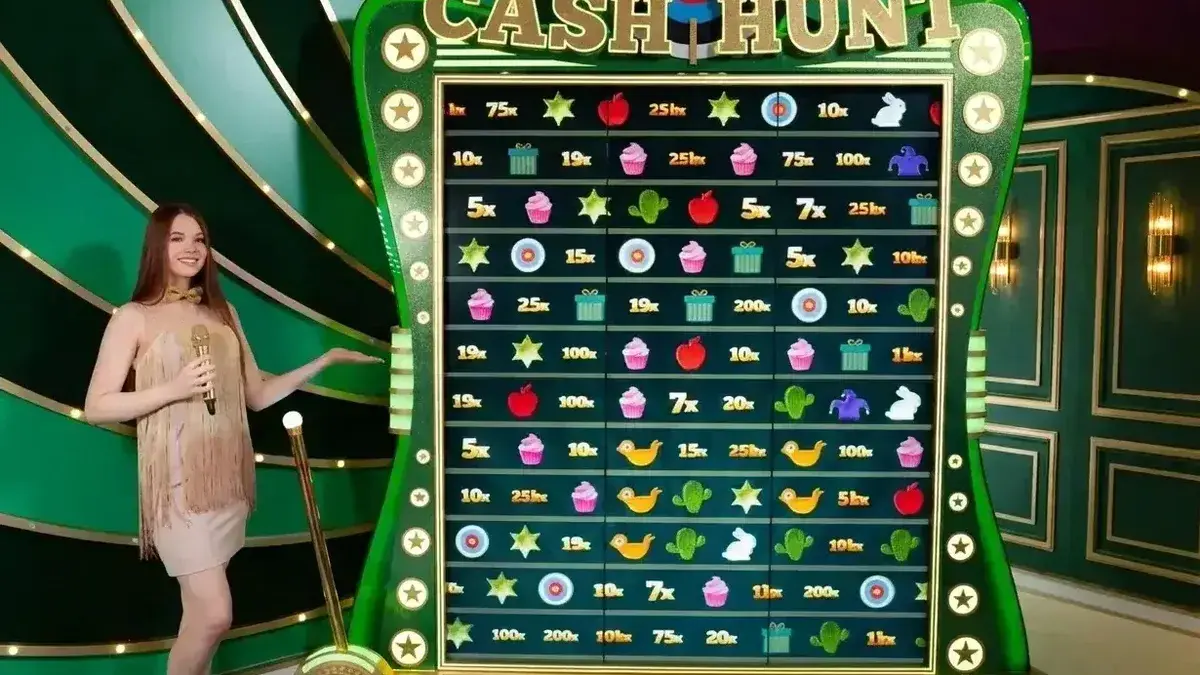
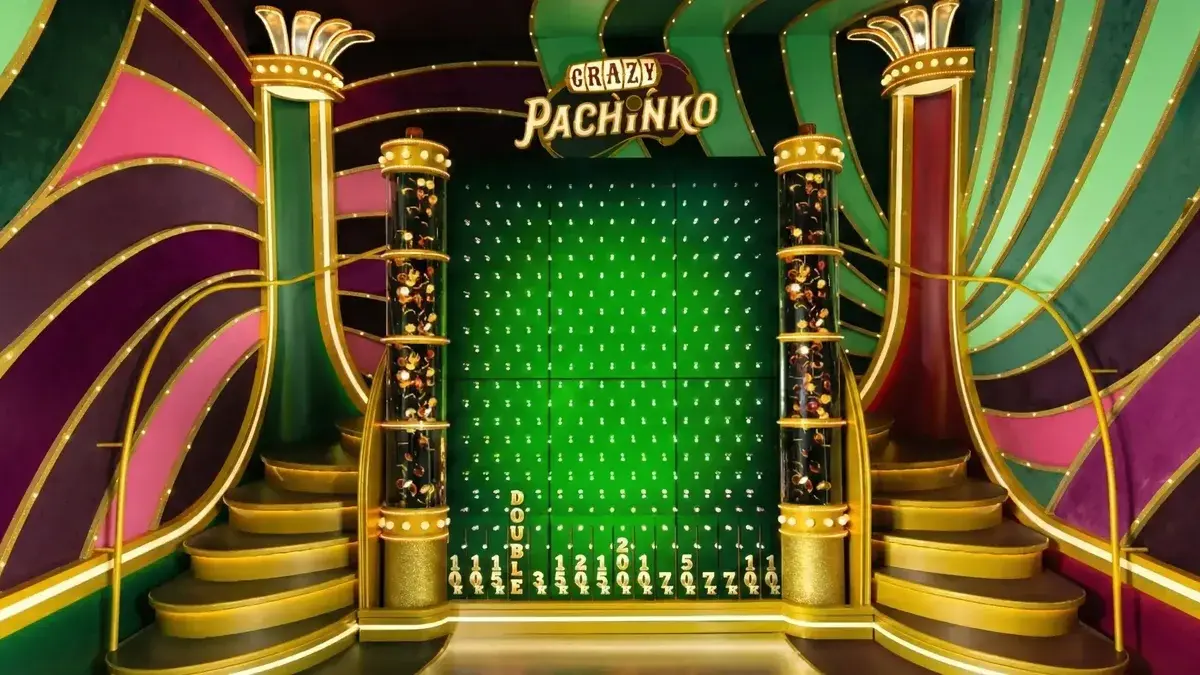

Cash Hunt Stats
Cash Hunt sits on 2 of 54 segments, so the expected hit rate is 3.70%, around once every 27 spins. Multipliers run from about 5x to 500x with a player tile pick. Average matched multiplier in most 24-hour samples lands between 30x and 80x. Top multiplier in any given window varies widely.
Pachinko Stats
Pachinko shares Cash Hunt’s 2-segment count and 3.70% expected rate. Multipliers run from 2x to 10,000x with Double chains. Average multiplier looks calmer than Cash Hunt because the Double chains are rare, but the top end pulls higher when they trigger. Most of the highest non-Crazy-Time multipliers live here.
Coin Flip Stats
Coin Flip is the most frequent bonus, with 4 segments (7.41%) and an expected hit around once every 13 to 14 spins. Multiplier ranges sit between 2x and 100x typical, with Top Slot boosts pushing higher. Coin Flip drives the bulk of the bonus hit share in short windows because of how often it lands.
Crazy Time Bonus Stats
The Crazy Time bonus sits on 1 of 54 segments, expected at 1.85%, roughly once every 54 spins. The bonus opens a 64-segment second wheel with three flappers (yellow, blue, green); each flapper rests on a multiplier with optional Double or Triple respins that compound until the chain ends. Top reported multiplier reaches 20,000x, sometimes higher with Top Slot stacking and Double or Triple flapper chains. Long dry spells of 80 to 150 spins between hits are within normal variance for a Bernoulli draw at 1.85%.
Bonus Hit Share
Bonus hit share is the count of all bonus rounds divided by spins in the window. Theoretical share sits at 9 of 54, or 16.67%. Crazy time bonus rounds names cover the full set: Cash Hunt, Pachinko, Coin Flip, and the Crazy Time bonus. Observed share drifts above or below 16.67% in most short samples; it converges over a 7-day window.
Average Bonus Multiplier
Average bonus multiplier blends every paid bonus inside the window. It is a quick read of how the wheel paid recently, not a forecast. A 24-hour average around 30x is normal; a single Pachinko 2,000x or a Crazy Time bonus 1,000x can swing the figure for a short while.
Multiplier Distribution
Crazy time multiplier distribution buckets every paid figure across the window: low (under 25x), medium (25x to 100x), high (100x to 1,000x), and standout (1,000x+). The distribution chart is one of the cleanest reads on the page because it does not depend on which segment landed; it shows the spread of crazy time multiplier stats inside the chosen sample. For longer-tail records, see big wins .
| Round | Lands | Share of sample | Spins since | Latest hit time | Average multiplier | Top multiplier |
|---|---|---|---|---|---|---|
| Cash Hunt | … | ~3.70% expected | … | … | … | … |
| Pachinko | … | ~3.70% expected | … | … | … | … |
| Coin Flip | … | ~7.41% expected | … | … | … | … |
| Crazy Time | … | ~1.85% expected | … | … | … | … |
Most frequent bonus
- Round
- Coin Flip
- Lands
- Syncing
- Share of sample
- 7.4%
Rarest bonus in window
- Round
- Crazy Time
- Lands
- Syncing
- Share of sample
- 1.9%
Latest bonus
- Round
- Pachinko
- Occurred at
- Syncing
- Multiplier
- 100x
Highest bonus multiplier
- Round
- Crazy Time
- Multiplier
- 500x
- Occurred at
- Past 24 hours
| Bucket | Bucket count | Bucket share | Largest multiplier |
|---|---|---|---|
| Low under 25x | Syncing | Most results | 20x |
| Medium 25x to 100x | Syncing | Common bonus range | 100x |
| High 100x to 1,000x | Syncing | Rare | 500x |
| Standout 1,000x+ | Syncing | Very rare | 1,000x+ |
Top Slot Stats
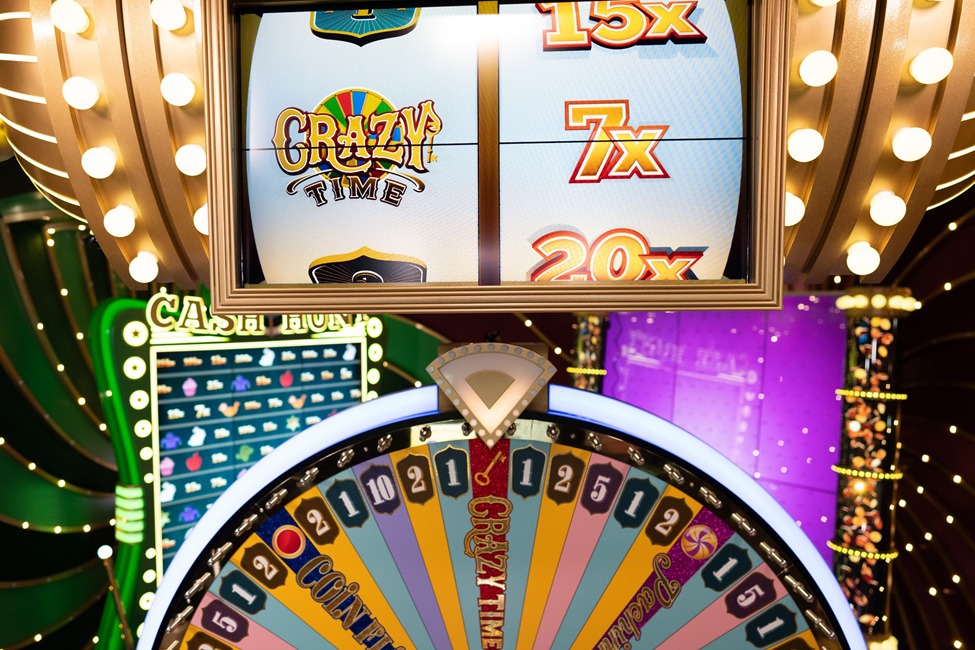
The Top Slot is the second engine on Crazy Time. It spins above the wheel before every round and pairs a random segment with a random multiplier between 2x and 50x. When the Top Slot segment matches the wheel result, every winning bet on that segment for the round pays at the boosted rate. Crazy time top slot stats split into two metrics: lands (how often each symbol shows up on the Top Slot reel) and matches (how often a Top Slot land aligns with the actual wheel outcome). Public Top Slot tables on casinoscores and tracksino show the same fields with their own sample windows; figures here use UK-aligned timezone (Europe/London) and pull from UKGC casino feeds only.
Top Slot Lands
Crazy time top slot lands track which segment the Top Slot reel rests on. Number 1 lands more often because of symbol weighting on the reel strip itself: the strip carries more 1 entries than any other symbol, so its land share runs higher than the corresponding wheel share. Bonus lands are rarer. The lands column below shows raw count and land share inside the sample window. This is descriptive only; the reel is independent of the wheel.
Top Slot Matches
Crazy time top slot lands and crazy time top slot match rate are different numbers. A land happens on every round; a match happens only when the Top Slot segment also lands on the main wheel. The expected match rate is the product of two independent probabilities, so matches are rare. Most 24-hour windows produce a handful, with most of them on Number 1 because both probabilities are highest there.
Top Slot Multipliers
Crazy time top slot multipliers run from 2x to 50x in standard rounds. Higher figures are weighted lower on the multiplier reel: 50x is the rarest paid value, while 2x and 3x make up the bulk of multiplier lands. The expected matched payout is the weighted average of multiplier x symbol-match probability, which is what RTP rolls into the certified figure. The multiplier_lands chart tracks how often each value appeared and how that compares with the boosted payouts when a match happened. For the rarer bonus matches, a 25x or 50x Top Slot multiplier on Pachinko or the Crazy Time bonus is what produces the headline payouts.
Symbol and Multiplier Pairing
Each round pairs one symbol with one multiplier. The pairing is independent of the wheel result. Tables below split the pairing into two views: lands by symbol with the multiplier that fired, and lands by multiplier with the symbol that took it. Crazy time top slot multipliers stack with bonus payouts when the Top Slot pairs a bonus segment that the wheel later confirms.
Recent Matches
Recent match cards capture the latest Top Slot match, the latest bonus match, the highest matched multiplier in the window, and the running match rate. This is what most players look at in real time. For row-level detail, the recent results feed shows time, segment, multiplier, and round type for the underlying spins.
| Symbol | Lands | Land share | Matches | Match rate | Latest match time |
|---|---|---|---|---|---|
| 1 | … | … | … | … | … |
| 2 | … | … | … | … | … |
| 5 | … | … | … | … | … |
| 10 | … | … | … | … | … |
| Coin Flip | … | … | … | … | … |
| Cash Hunt | … | … | … | … | … |
| Pachinko | … | … | … | … | … |
| Crazy Time | … | … | … | … | … |
| Multiplier | Lands | Matches | Average payout when matched |
|---|---|---|---|
| 2x | … | … | … |
| 3x | … | … | … |
| 5x | … | … | … |
| 7x | … | … | … |
| 10x | … | … | … |
| 15x | … | … | … |
| 20x | … | … | … |
| 25x | … | … | … |
| 50x | … | … | … |
Latest Top Slot match
- Event type
- Top Slot match
- Occurred at
- Syncing
- Symbol
- 5
- Multiplier
- 10x
Latest bonus match
- Event type
- Bonus match
- Occurred at
- Syncing
- Symbol
- Pachinko
- Multiplier
- 25x
Highest matched multiplier
- Event type
- Matched boost
- Occurred at
- Past 24 hours
- Symbol
- Crazy Time
- Multiplier
- 500x
Match rate in sample
- Match rate
- Syncing
- Sample window
- Past 24 hours
For row-level Top Slot detail, open recent results . For the rules around stacking and settlement, see Crazy Time rules and Top Slot RTP .
Hot and Cold Segments

Crazy time hot and cold segments are the most-asked stat on the page and the most easily misread. Crazy time live statistics in this section show segment delta, movement against a previous equal range, and a number-vs-bonus group split. A hot segment landed more often than expected inside the chosen window. A cold segment landed less often. Both are crazy time hot or cold (segment label) tied to a sample size, not signs of a future change. The wheel has no memory; each round is independent of every round before it.
Hot Segments
Hot segments are the ones with positive delta versus expected share inside the selected window. The label means “ran above expected recently”, nothing more. Crazy time stats spike happens often in short windows: a Coin Flip burst can run 8% above expected for an hour and drop back inside the next 200 spins. Hot does not mean due to keep going. Hot does not mean due to stop. The hot-hand fallacy and the gambler’s fallacy both end here: a streak does not predict its continuation, and a drought does not predict a correction. It just means recent.
Cold Segments
Cold segments have negative delta versus expected. A 24-hour cold reading on the Crazy Time bonus is normal because the segment occupies just 1 of 54 positions. Long cold spells on rare segments are the default state, not an anomaly. Cold does not mean due; that framing is the gambler’s fallacy in action. Each round on the Crazy Time wheel is an independent random draw, with no link to the previous one. Recency bias makes a 200-spin sample feel more meaningful than it is.
Number vs Bonus Split
The number-versus-bonus split shows how the sample distributed between numbered segments and bonus segments. Theoretical share sits at 45 of 54 (83.33%) on numbers and 9 of 54 (16.67%) on bonuses. Crazy time hot and cold segments often look extreme in short windows because the bonus group is rare. The split card balances that perception by showing the group share alongside the per-segment delta.
Bonus Segment Movement
Bonus segment movement compares the current window’s bonus share with the previous equal range. If the past 24 hours saw 17.5% bonus share and the previous 24 hours saw 14.8%, the movement reads +2.7 points. That is recent context only. The next 24 hours could move either way; the wheel does not chase or correct.
Volatility Notes
Volatility on Crazy Time is range movement, not a guarantee. The standard deviation of payouts widens on bonus rounds and tightens on numbered bets, so the same expected value (EV) can sit behind very different session shapes. Pachinko and the Crazy Time bonus carry the highest variance: long dry runs punctuated by single-round payouts that sit several standard deviations above the average and read as outliers on the distribution chart. Coin Flip carries the lowest because it triggers most often and pays inside a tighter multiplier band. The volatility meter below maps the current window against the previous equal range so the comparison sits on one card.
When to Open the Predictor
Search demand for “best crazy time stats tracker 2026” and “crazy time stats tracker” often points to the predictor view. The Crazy Time predictor reads recent stats and surfaces hot or cold signals with a sample-size note. It is a trend-reading tool. It is not a forecast and never claims to be one. For strategy limits on bankroll, see the dedicated page; for older rows beyond this window, see spin history .
| Segment | Observed share | Expected share | Delta | Spin count | Movement |
|---|---|---|---|---|---|
| 1 | Syncing | 38.89% | Syncing | Syncing | Above recent baseline |
| 2 | Syncing | 24.07% | Syncing | Syncing | Below recent baseline |
| 5 | Syncing | 12.96% | Syncing | Syncing | Above recent baseline |
| 10 | Syncing | 7.41% | Syncing | Syncing | Below recent baseline |
| Coin Flip | Syncing | 7.41% | Syncing | Syncing | Above recent baseline |
| Cash Hunt | Syncing | 3.70% | Syncing | Syncing | Below recent baseline |
| Pachinko | Syncing | 3.70% | Syncing | Syncing | Above recent baseline |
| Crazy Time | Syncing | 1.85% | Syncing | Syncing | Below recent baseline |
Open the predictor instead
-
Crazy Time predictor
Reads sample windows, recent segment shares, and bonus hits with clear sample-size notes.
Open predictor →
The predictor is a trend tool. It does not claim to forecast the next spin.
Stats, RTP, Tracker, and Predictor

Live data demand splits across several pages on this site, and casino stats crazy time queries land on different ones depending on the intent. This section clarifies what each page does so the reader picks the right tool. Statistics crazy time, stats crazy time, live crazy time stats, crazytime stats, casino stats crazy time, and crazy time results stats all map roughly to the same intent: observed numbers from a recent sample. The other pages cover theory, raw rows, archive, and trend reading.
Stats
This page summarises observed sample behaviour: segment frequency, bonus rates, Top Slot lands and matches, multiplier distribution, and hot or cold deltas. Best for: “what did the wheel do recently”. Data depth: medium-high. The stats page pulls rolled-up numbers, not individual rows.
RTP
RTP by segment is theoretical return certified by Evolution and audited under UKGC rules with eCOGRA-style fairness checks behind the figure. The headline RTP sits at 96.08% on the number 1 bet, which equals a house edge of about 3.92%. Bonus-bet RTP runs between 94.33% (Pachinko) and 96.08% (Cash Hunt). RTP is long-run math, not a session promise. Best for: “what is the certified return”. Data depth: theoretical only.
Tracker
The Crazy Time tracker is the wider data workspace: live score, recent results, segment frequency, bonus hit board, and sample windows in one place. Best for: “watch the wheel state right now and the latest spins together”. Data depth: high, with row-level access.
Predictor
The Crazy Time predictor reads recent stats and surfaces hot or cold signals with sample-size warnings. It is a trend tool, not a forecast. Best for: “I want a single page that reads the recent trend cautiously”. Data depth: medium, with explicit no-forecast framing.
History
Crazy Time history archives older rows beyond the rolling window on this page. Best for: “I want yesterday’s full row list, or a month-old date” along with latest results for the most recent rows. Data depth: high, row-level archive.
Pick the right data page
-
Stats
Observed sample behaviour and rolled-up numbers.
Open stats → -
RTP
Certified theoretical return and long-run math.
Open RTP → -
Tracker
Live wheel state plus recent rows.
Open tracker → -
Predictor
Hot or cold trend reading with cautious signals.
Open predictor → -
History
Older row-level archive beyond the rolling window.
Open history → -
Results
Recent row list with time and segment.
Open results →
Each card routes to the page that best matches that data intent.
How to Read Crazy Time Stats
Stats on Crazy Time work the same way for new and returning players: pick a window, scan the cards, then check the data limits. The fields below appear across most blocks on this page. A safer way to read this is to start wide (past 7 days), check the rough shape, and only then narrow to a shorter window if you want a recent snapshot. The catch is that short windows look exciting and often mislead.
Choose a Sample Window
Sample window is the time range used to build every figure on the page. Crazy time stats history pulls from the same feed, but the window decides which spins enter the sum. Past 24 hours is the default. Past 7 days is the steadiest read. Last hour and past 6 hours are the noisiest and the most fun to watch, but they swing.
Read Frequency Cards
Each frequency card carries five fields: lands, share of sample, expected share, delta, and spins since. Lands is the raw count. Share of sample is lands divided by spin count. Expected share is the certified figure from the Evolution wheel spec. Delta is observed minus expected. Spins since counts how many rounds passed since the last hit inside the window.
Read Spins Since
Spins since is measured inside the selected data window only. A spins-since reading of 65 on the Crazy Time bonus does not mean 65 spins worldwide. It means 65 spins inside this sample. Before betting, check the window. The figure means very different things on a 7-day window versus a 1-hour window.
Read Average Multipliers
Average multiplier is the mean payout for a segment or bonus inside the window, where data supports it. It blends every paid figure together. A single Pachinko 2,000x or a Crazy Time bonus 1,000x can lift the average for a short while. The average is observed sample value, not a forward-looking estimate.
Compare With Expected Share
Expected share comes from the wheel spec. It does not change. Observed share moves with the sample. Comparing the two answers a useful question (how far from expected ran this segment recently) without making certainty claims. A 4-point delta on Number 1 in a 200-spin window is variance and falls inside one or two standard deviations. The same 4-point delta on a 5,000-spin window is unusual but still not predictive. Expected value (EV) and house edge (about 3.92% on Number 1) settle the long-run math; observed share only describes the recent window.
Check Data Limits
Possible delay (1 to 2 minutes after a round closes), table scope (single Crazy Time broadcast), source scope (UK Gambling Commission licensed casino public feeds), timezone (Europe/London for this UK edition), and sample size all live on the data limits notice. UK players must be 18+ at any UKGC casino, and the GAMSTOP register, GamCare, and BeGambleAware sit one click away on responsible gambling . Stakes and limits at UKGC sites run in GBP. For the certified return tables, route to theoretical RTP . For the underlying spins, see result rows . For older rows, see older results .
-
Choose a sample window
Pick the range that matches your question.
-
Check spin count
Use spin count as the confidence floor for the sample.
-
Compare observed and expected
Read observed share against the certified expected share.
-
Read data limits
Check delay, timezone, source scope, and table scope before any bet.
-
Open the next page
Use results, history, tracker, or RTP when you need a different data view.
Crazy Time Stats FAQ
What are Crazy Time stats?
How often are Crazy Time stats updated?
What does sample window mean?
What does spins since mean?
What is the difference between stats and RTP?
What are hot and cold segments?
Can stats predict the next Crazy Time spin?
Where can I see bonus frequency?
Where can I compare stats with history?
Can I use stats with the predictor?
Last reviewed: 2026-04-29
For raw rows, open recent results . For older spins, see Crazy Time history . For trend reading, the Crazy Time predictor covers method and limits. For certified theoretical math, RTP by segment is the source of truth.