Crazy Time UK / Strategy
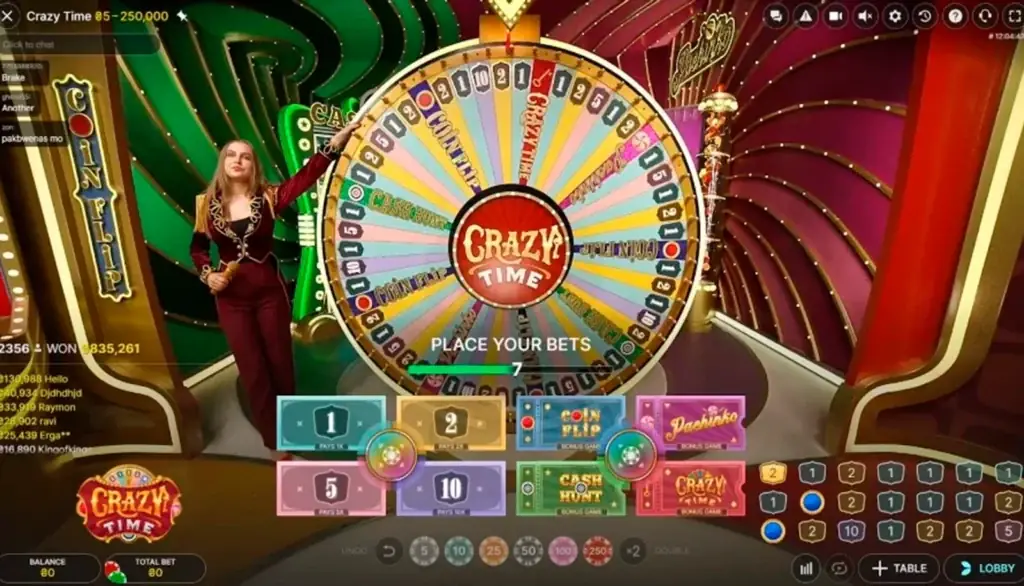
Crazy Time betting screen with wheel and bet spots

Bet types and limits

Crazy Time Strategy

Understand what Crazy Time strategy can control: bet type exposure, variance, stake sizing, bankroll limit, session limit and data reading. It cannot change random outcomes or turn historical results into next-spin signals.

Low variance

Numbers

Mixed profile

Balanced

High variance

Bonuses

Unsafe ladder

Progression

Decision boundary

What Strategy Can and Cannot Do

Start with the line that matters: no betting system changes the return of a Crazy Time bet. The wheel layout, payout rules and house edge sit inside the game, while every main-wheel spin is an independent random outcome.

Strategy still has a practical role. It can choose how quickly a bankroll moves, which bonus rounds a stake qualifies for, how much variance the session carries and where stop-loss or time limits sit. That is risk management, not prediction.

The return figures and segment counts belong on Crazy Time RTP. This page uses those numbers to explain exposure profiles, then points back to the data tools rather than duplicating their depth.

Exposure profiles

Bet Types and Risk Levels

Use profile names as shorthand for session texture, not as instructions. Conservative, Balanced and Bonus Hunter structures all face the same wheel; they simply move risk into different places.

Crazy Time staking profiles and variance comparison
Profile Where stakes sit Session texture Variance
ConservativeMostly numbers, especially 1 and 2.Frequent small settlements and slower movement.Lowest
BalancedNumbers plus smaller bonus exposure.Numbers soften quiet stretches; bonuses add swing.Middle
Bonus HunterCoin Flip, Cash Hunt, Pachinko and named bonus.Most non-bonus spins miss the profile.Highest
Cover-allEvery spot each round.Something often returns, but cost can be hidden.Deceptive
ProgressionAny profile with stakes raised after losses.Calm early, then exponential pressure.Unbounded

Cover-all maths

One unit on each of the eight bet spots stakes 8 units. If Number 1 lands, the 1 spot returns 2 units in total, leaving a net loss of 6 units for that spin.

Bonus-only gaps

Bonus segments hold 9 of 54 positions. A ten-spin stretch with no bonus is (45/54)^10, about 16%, so long quiet runs are normal structure.

Martingale pressure

A doubling ladder runs 1, 2, 4, 8, 16 and 32 units. Six losing steps place 63 units at risk before the next stake request appears.

Data boundary

Using Statistics and Tracker Data

Use Crazy Time statistics and the Crazy Time tracker to calibrate expectations. They show historical results, recent gaps, bonus frequency and the live rhythm of the wheel.

That reading can make droughts feel less mysterious and streaks less persuasive. It cannot time entry or exit. A completed result is a record, not a lever on the next independent spin.

The useful action is emotional and structural: stop chasing losses, recognise variance before it feels personal, and keep the session inside the bankroll limit chosen before play.

Interpretation layer

Predictor Limits

The predictor trend view is best read as a probability and sample-size view. It can compare observed frequency against the wheel layout, label sample confidence and show whether a recent gap is short or long.

It cannot identify the next spin, and it should not be used as software signal chasing. Any product that sells next-round certainty, fixed accuracy percentages or hidden timing systems is crossing the line from data reading into a claim randomness does not support.

Myth cleanup

Common Misunderstandings

The gambler's fallacy is the most common trap: a bonus that has not landed for a while is not owed to arrive. The next spin still follows the layout, not the feeling created by the previous stretch.

Hot and cold patterns are similar. A heatmap can describe drift over a small sample, but independent random outcomes naturally produce uneven clusters. The cluster is history, not a message.

Demo-proven systems need the same boundary. Free demo play is useful for learning the interface and bet spots, not for validating a staking pattern. A structure that ran well in practice chips has not changed the real-money variance profile.

Searches for tactics and tricks deserve a plain answer: Crazy Time has rules to learn, risk profiles to choose and safer gambling limits to set. It does not contain a technique that improves the next outcome.

Quick answers

FAQ

What is the best Crazy Time strategy?

No structure changes return. The useful choice is profile: conservative number anchoring, balanced exposure or high-variance bonus hunting, with limits set before play.

Can Crazy Time be predicted?

No. Results are independent random outcomes. Statistics can describe history, but they cannot identify the next spin.

Does Martingale work on Crazy Time?

A doubling ladder grows quickly while the wheel odds stay the same. Bankroll and table limits can end the ladder before a recovery round appears.

What is the 1 3 2 6 method?

It is a progression pattern that changes stake size after results. It does not change return or make past outcomes useful for the next spin.

Are Crazy Time predictors accurate?

A responsible predictor can describe sample behaviour and probability context. It should not claim next-round certainty or hidden timing knowledge.

What does sensible bankroll management look like?

Set an operator deposit limit, a session limit in time or money, and a per-spin stake that can survive the chosen variance profile.

Source check

Source Notes

Strategy claims are kept inside a conservative evidence boundary: game data can describe what happened, while advertising-style next-result claims need strong control.

Evolution statistics

Supports using spin history and statistics as historical data rather than next-spin prediction.

Statistics source

ASA tipster advice

Supports caution around betting claims that imply reliable foresight from tips, systems or past results.

ASA advice

Related data

Use RTP, tracker and predictor pages for the live tools this page references at link depth.

Predictor limits

Separated action

Set Limits Before Play

Strategy starts before the table opens: decide the entertainment budget, choose a session length and keep the stake small enough for the chosen variance profile.

Use operator safer gambling tools, avoid chasing losses and treat data pages as context rather than timing instructions.